Buying a Home in Brooklyn NY: Essential Tips for 2026
Buying a home in Brooklyn NY in 2026 requires understanding a fast-moving market with limited inventory and strong demand. According to Zillow, the typical Brooklyn home value stood in the mid-$900,000 range as of late 2024, after several years of steady gains. Neighborhoods such as Park Slope, Williamsburg, and Brooklyn Heights continue to attract buyers seeking access to Prospect Park, Brooklyn Bridge Park, and reliable subway lines. Careful preparation, clear priorities, and realistic budgeting now matter more than ever.
How should buyers define the right Brooklyn neighborhood in 2026?
Neighborhood selection drives lifestyle, commute patterns, and long-term resale prospects. According to Redfin, median sale prices in late 2024 ranged from the low-$700,000 level in parts of Crown Heights to well over $1,500,000 in Brooklyn Heights. Park Slope, Greenpoint, and Carroll Gardens sit between those ranges, with varied housing stock on leafy streets such as Prospect Park West, Henry Street, and Manhattan Avenue. Buyers prioritizing townhomes often focus on Bedford-Stuyvesant, Clinton Hill, or Bay Ridge.
School access shapes demand on blocks around P.S. 321 William Penn near Seventh Avenue and Brooklyn Technical High School on Fort Greene Place. According to GreatSchools, P.S. 321 holds a rating in the 9/10 range, which supports premium pricing for homes within a short walk. Proximity to magnet schools, like Brooklyn Tech, further influences choices in Fort Greene and Downtown Brooklyn, especially for buyers planning long-term residence horizons longer than 7 or 8 years.
On warm spring afternoons along Montague Street near the entrances to Brooklyn Bridge Park, the scent of espresso from local cafes mingles with the salty air drifting off the East River. Sunlight reflects off brownstone facades, while the distant hum of traffic on the Brooklyn-Queens Expressway underlines the chatter from sidewalk tables. Shoppers browse bookstores and bakeries, and the gentle clatter of dishes from restaurants creates an atmosphere distinct from the busier stretches of Atlantic Avenue and Fulton Street.
What budget and financing strategies fit Brooklyn’s 2026 prices?
Budget planning for buying a home in Brooklyn NY must reflect down payment requirements, closing costs, and potential renovations. According to StreetEasy, typical listing prices in many central Brooklyn neighborhoods clustered between $800,000 and $1,200,000 in 2024. Assuming a traditional 20% down payment, that range implies cash needs between roughly $160,000 and $240,000, before closing expenses. For buyers using FHA loans, the minimum down payment of 3.5%, noted by HUD, can reduce upfront cash but raises monthly carrying costs.
Interest-rate trends also matter. According to Freddie Mac, average 30-year fixed mortgage rates in late 2024 ranged near the high-6% to low-7% territory. A rate difference of just 1 percentage point can shift monthly payments on a $900,000 condo financed with 80% loan-to-value by several hundred dollars. Careful pre-approval and rate-lock timing therefore become central to aligning neighborhood ambitions with realistic monthly payment thresholds and future refinancing expectations.
Property taxes and common charges vary widely between co-ops, condos, and townhomes. The Tax Foundation reports that New York City’s effective property tax rate often falls below 1% for many primary residences, although co-op and condo monthly maintenance can add another $1,000 to $2,000. Townhouses on streets such as President Street in Carroll Gardens or MacDonough Street in Bedford-Stuyvesant might feature higher absolute taxes but lower shared building fees, altering overall affordability comparisons.
How competitive is the 2026 Brooklyn bidding environment?
Offer strategies in Brooklyn must adapt to constrained inventory. According to Redfin, months of supply in late 2024 often hovered near 2 to 3 months in core neighborhoods such as Williamsburg, Park Slope, and Brooklyn Heights, well below the 5 to 6 months typically associated with balanced conditions. This low supply contributed to roughly 40% to 50% of homes selling above list price in several zip codes, especially for well-renovated brownstones near Prospect Park and townhomes close to the L train in Williamsburg.
Days on market provide another benchmark. According to Zillow Research, many Brooklyn listings in 2024 entered contract within 25 to 35 days, with move-in-ready properties near Atlantic Avenue, Court Street, and Smith Street often trading even faster. This pace means buyers interested in a condo facing Brooklyn Bridge Park or a loft in DUMBO on Water Street must typically schedule tours quickly, review offering plans beforehand, and prepare for deadline-driven bid processes involving escalation clauses or flexible closing dates.
Evening open houses near the Williamsburg waterfront, especially along Kent Avenue by Marsha P. Johnson State Park, create a vivid impression of lifestyle as much as layout. The low thrum of music from nearby bars drifts through open windows, mixing with the smell of grilled food from food trucks and the mineral scent of the river. Sunsets reflect pink and orange across glassy condo towers, while the distant rumble of the J and M trains provides a steady urban backdrop.
What role do commute times and amenities play in selecting a property?
Commute patterns strongly shape demand for homes near major subway lines. According to schedules summarized by the MTA, travel between Downtown Brooklyn and Midtown Manhattan typically ranges from 25 to 30 minutes via the 2, 3, 4, 5, N, and R trains from Atlantic Avenue–Barclays Center. Buyers who prioritize minimal transfers frequently focus on properties near express stops such as Atlantic Avenue, Dekalb Avenue, and Borough Hall, while others accept slightly longer trips from Bay Ridge or Kensington in exchange for more space.
Walkability metrics add another dimension. According to Walk Score, many Brooklyn neighborhoods score between 90 and 98, qualifying as “Walker’s Paradise” environments. Streets surrounding Barclays Center, the Brooklyn Academy of Music, and Fulton Mall showcase dense clusters of restaurants, gyms, and cultural venues. Areas bordering Prospect Park and Fort Greene Park offer immediate access to green space, while dining corridors such as Smith Street, Franklin Avenue, and Bedford Avenue highlight the borough’s restaurant diversity and late-night energy.
Parks and waterfronts influence both lifestyle and long-term appeal. According to NYC Parks, Prospect Park spans more than 500 acres of meadows, trails, and sports fields, anchoring neighborhoods including Park Slope, Windsor Terrace, and Prospect Lefferts Gardens. Brooklyn Bridge Park’s piers stretch over 1.3 miles along the East River, providing playgrounds, lawns, and skyline views that support premium pricing for Columbia Heights, Brooklyn Heights, and DUMBO properties overlooking the promenade and ferry landings.
How can buyers evaluate co-ops, condos, and townhomes in Brooklyn?
Building type significantly affects flexibility, costs, and long-term plans when buying a home in Brooklyn NY. According to analyses from the NYU Furman Center, co-ops still represent a substantial share of the borough’s multifamily housing stock, particularly in prewar buildings along Ocean Parkway, Eastern Parkway, and Shore Road in Bay Ridge. Co-ops typically require board approval, higher post-closing liquidity, and stricter sublet policies compared with condos, which appeal to buyers valuing easier rental options and simpler transfers.
Condos dominate recent new developments, especially around Downtown Brooklyn’s Flatbush Avenue corridor, near City Point and Dekalb Market Hall. According to StreetEasy, new-development condo prices in 2024 often ranged from roughly $1,200,000 to $2,400,000 in central Brooklyn high-rises, with amenities such as doormen, gyms, and roof decks. Townhomes in neighborhoods like Boerum Hill, Cobble Hill, and Carroll Gardens can exceed $3,000,000 for fully renovated properties on tree-lined blocks, though some legal two- or three-families offer income from rental units.
Due diligence should extend beyond price and layout. According to guidance from REBNY, reviewing building financials, reserve levels, and recent assessments is critical, particularly in older co-ops along avenues like Ocean Parkway or Grand Army Plaza. For condos, examining bylaws for sublet rules, pet policies, and upcoming capital projects helps clarify potential future costs, especially when common charges already exceed $1,500 per month in amenity-heavy towers.
The mid-$900,000 typical Brooklyn home value cited at the start of this guide reflects a borough where sustained demand and limited buildable land continually pressure prices. That figure from late 2024 underscores how even modest shifts in mortgage rates or inventory levels can reshape affordability bands by tens of thousands of dollars. The Real Estate Board of New York market reports provide one of the clearest borough-wide snapshots of pricing, days on market, and new-development pipelines. Buyers who register listing alerts through trusted portals and commit to touring viable homes within 48 hours of listing, especially before the spring surge in April and May, tend to secure accepted offers sooner and avoid the sharper price jumps that often follow peak-season competition.
FROM OUR BLOG

Discover the Best Apartments for Rent in Long Island City: 2026 Guide
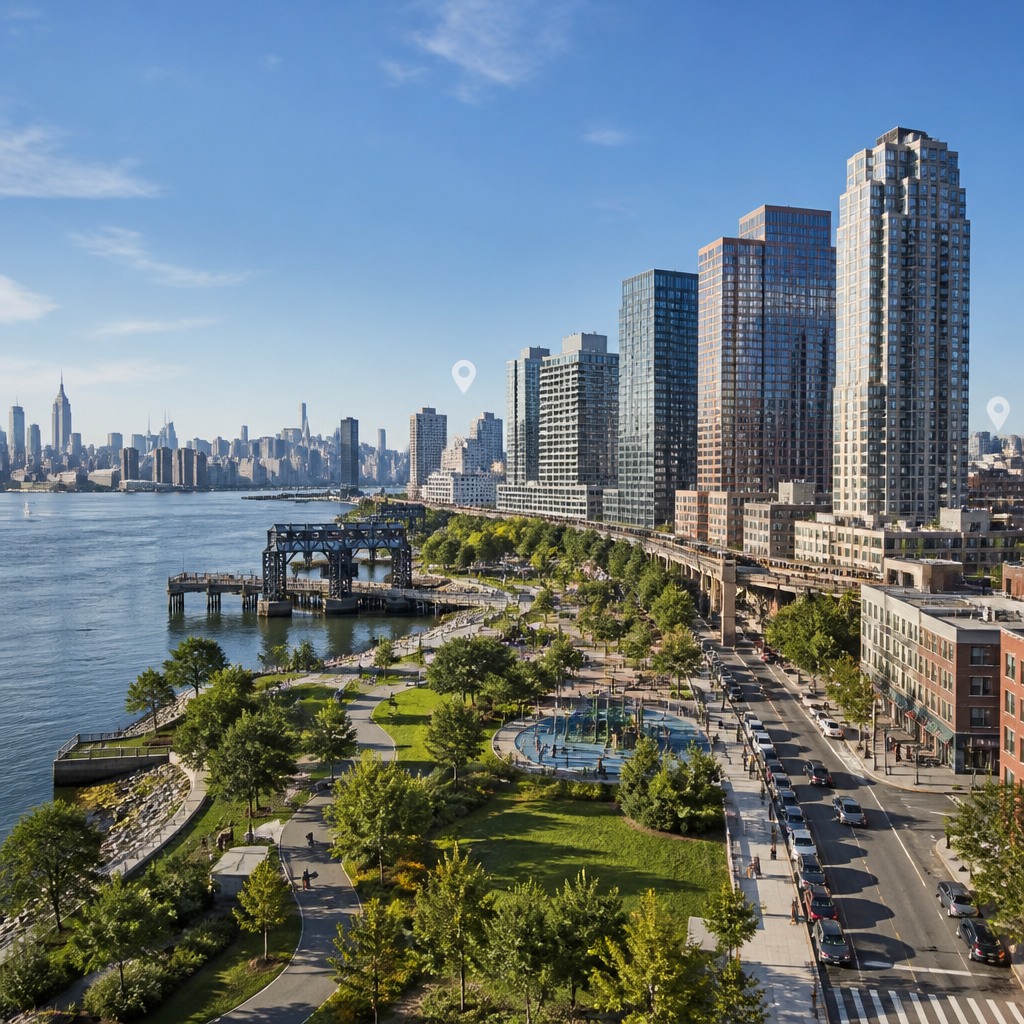
Discover the Best Apartments for Rent in Long Island City: 2026 Guide Long Island City has transformed into one of New York’s most in-demand rental corridors, with sleek towers lining the East River and converted warehouses along Vernon Boulevard. According to StreetEasy, average asking rents for Qu

Ridgewood NY Residential Sales: Market Trends and Insights for 2026
Ridgewood NY Residential Sales: Market Trends and Insights for 2026 Ridgewood NY residential sales entering 2026 reflect a maturing outer-borough market with sustained demand from both Brooklyn and Manhattan commuters. According to Walk Score, Ridgewood posts a Walk Score around 92, signaling strong
Your Ultimate Long Island City Neighborhood Guide: What to Know in 2026
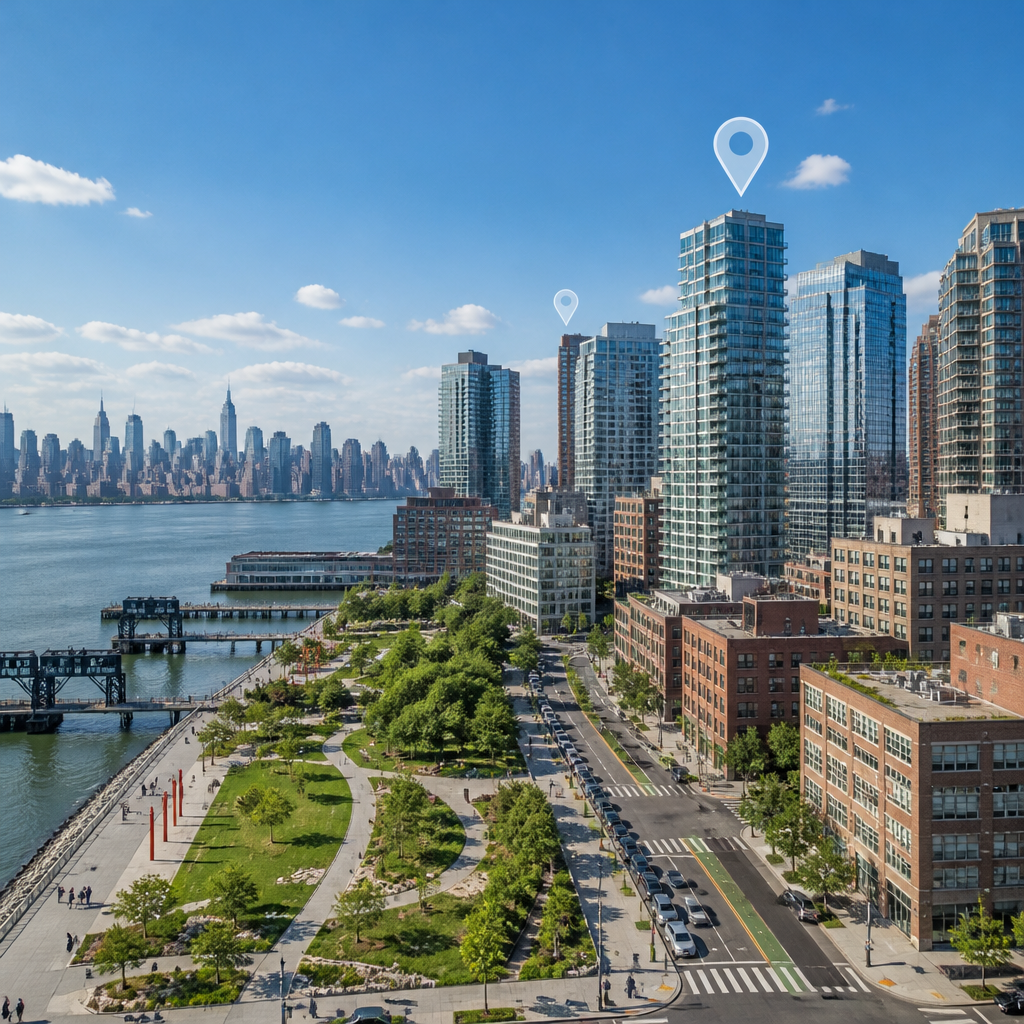
Your Ultimate Long Island City Neighborhood Guide: What to Know in 2026 Long Island City in Queens has transformed from an industrial waterfront into one of New York City’s fastest-changing residential hubs. According to Niche, the neighborhood’s population has risen into the tens of thousands over